

A Gift We Never Expected
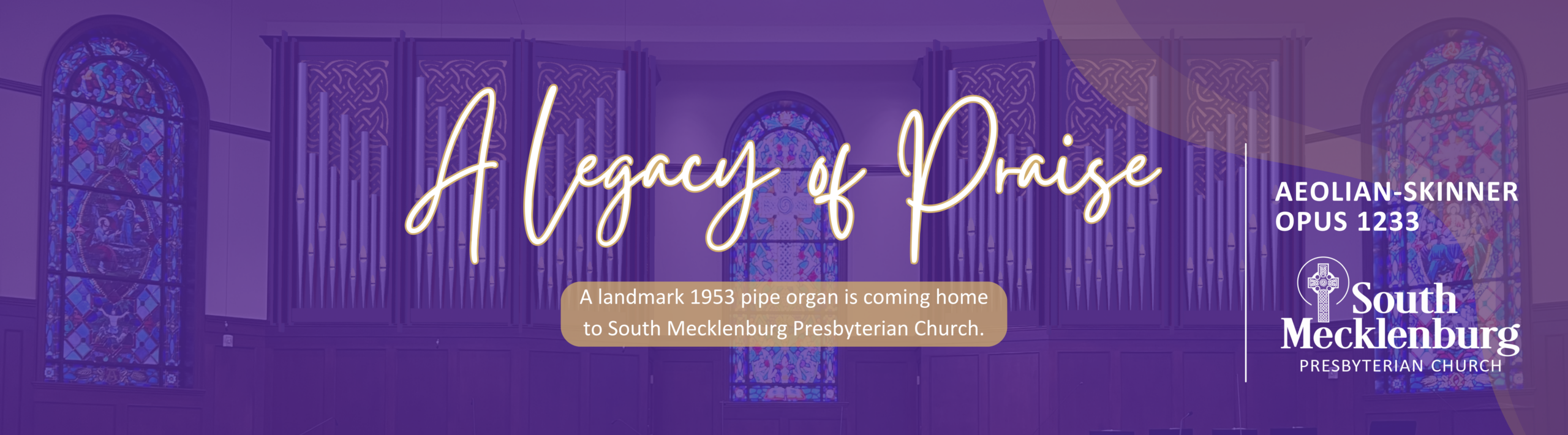
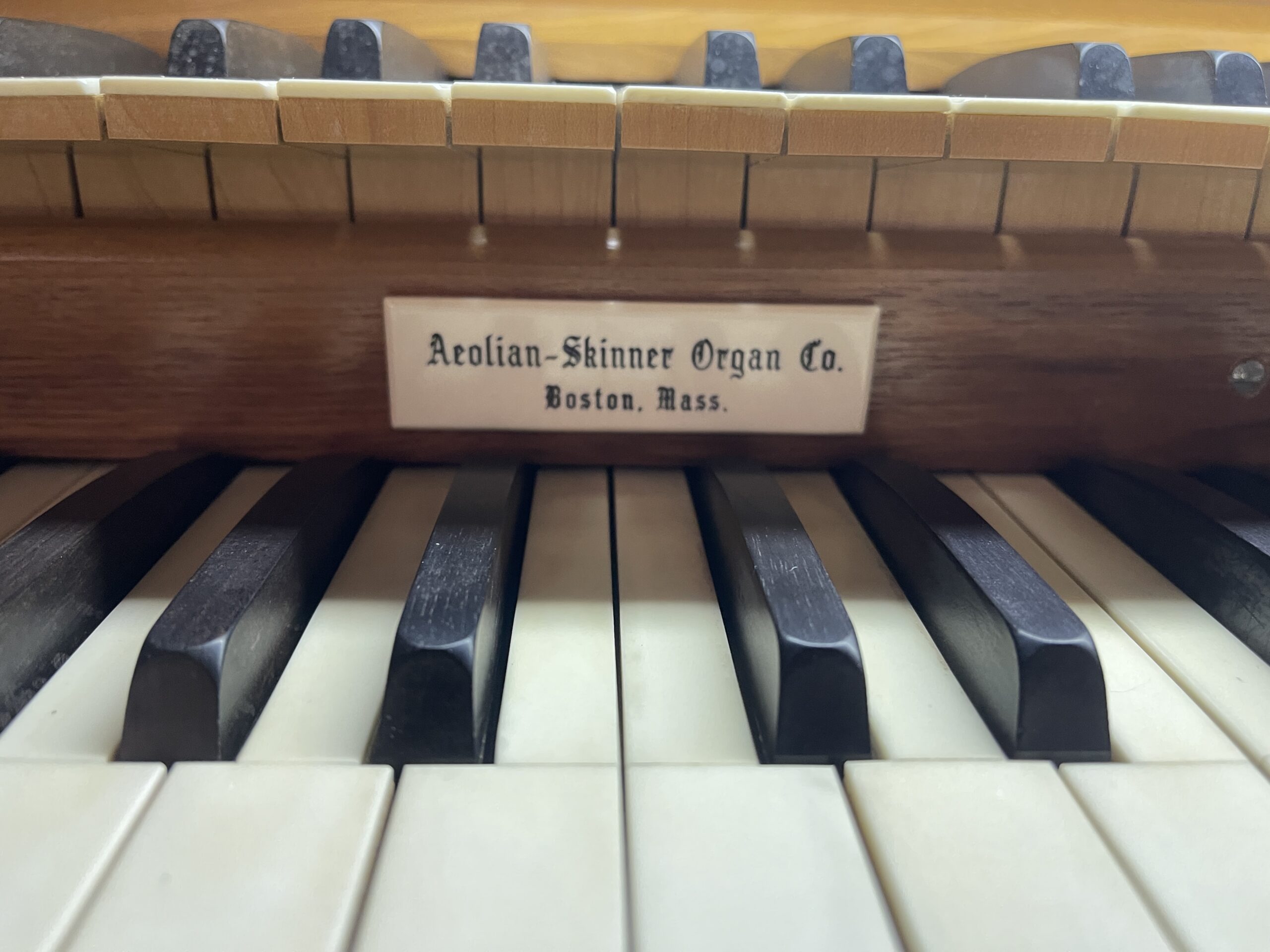
South Mecklenburg Presbyterian Church is welcoming a treasured instrument with an incredible history into our sanctuary. Thanks to the generosity of our congregation, we are nearing the installation of a 1953 Aeolian-Skinner Opus 1233 pipe organ. Read more about the instrument's history, how it found its new home at SMPC, and how you can get involved.
For more information on this project, contact Zach Bowyer, Director of Music and Organist.
The History
Some gifts arrive after years of planning. This one arrived over Thanksgiving dinner.
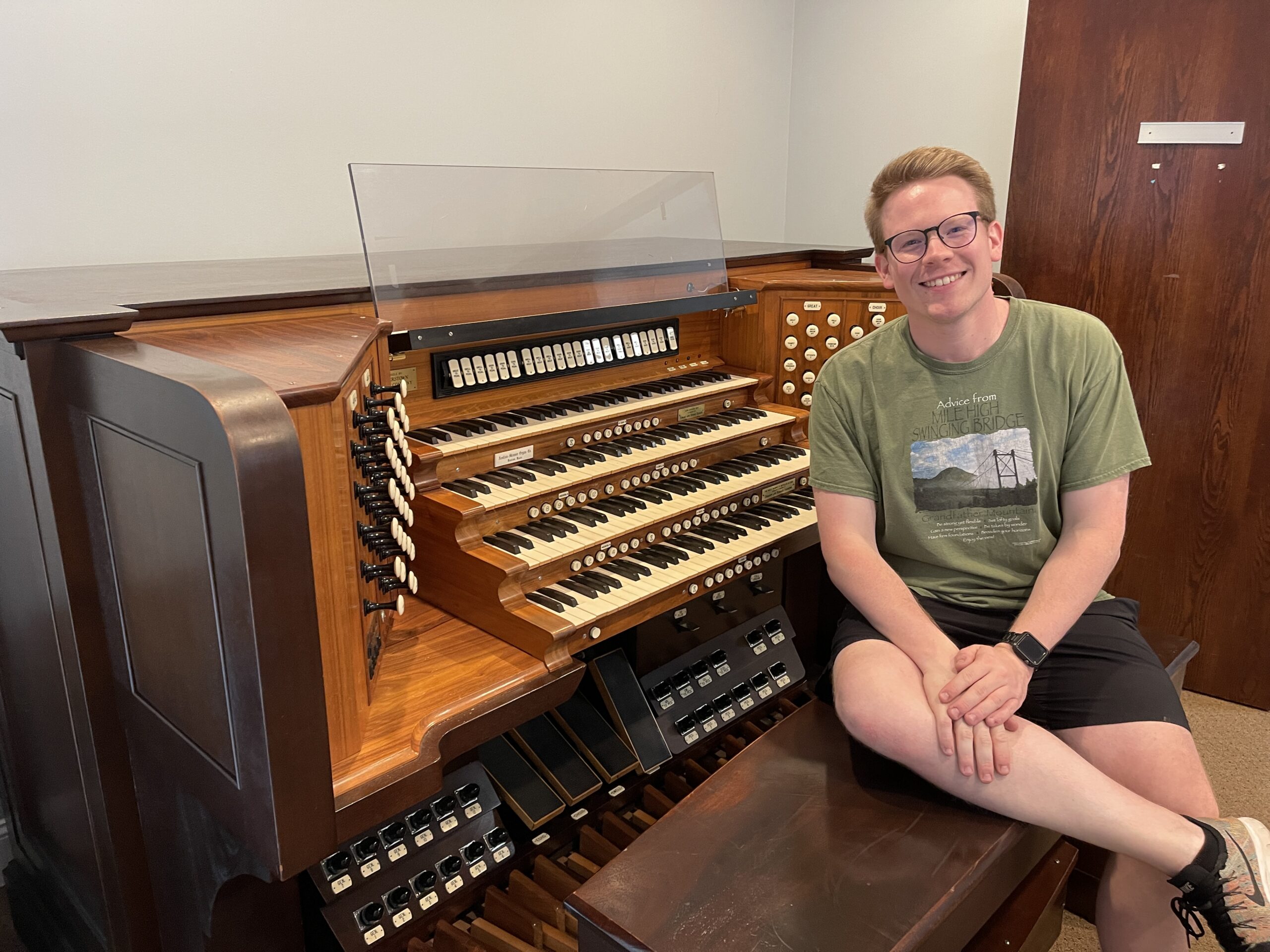
SMPC Director of Music and Organist Zach Bowyer learned through a family friend that Calvary Baptist Church in Roanoke, Virginia, was selling its building. The congregation had a treasure on its hands and nowhere for it to go: a 1953 Aeolian-Skinner pipe organ, one of the finest instruments built in America in the twentieth century.
That Thanksgiving, Zach sat down at the console and played it. Calvary’s pastor listened, and then said eight words that changed the next several years of this church’s life:
“If you can get it out, it’s yours.”
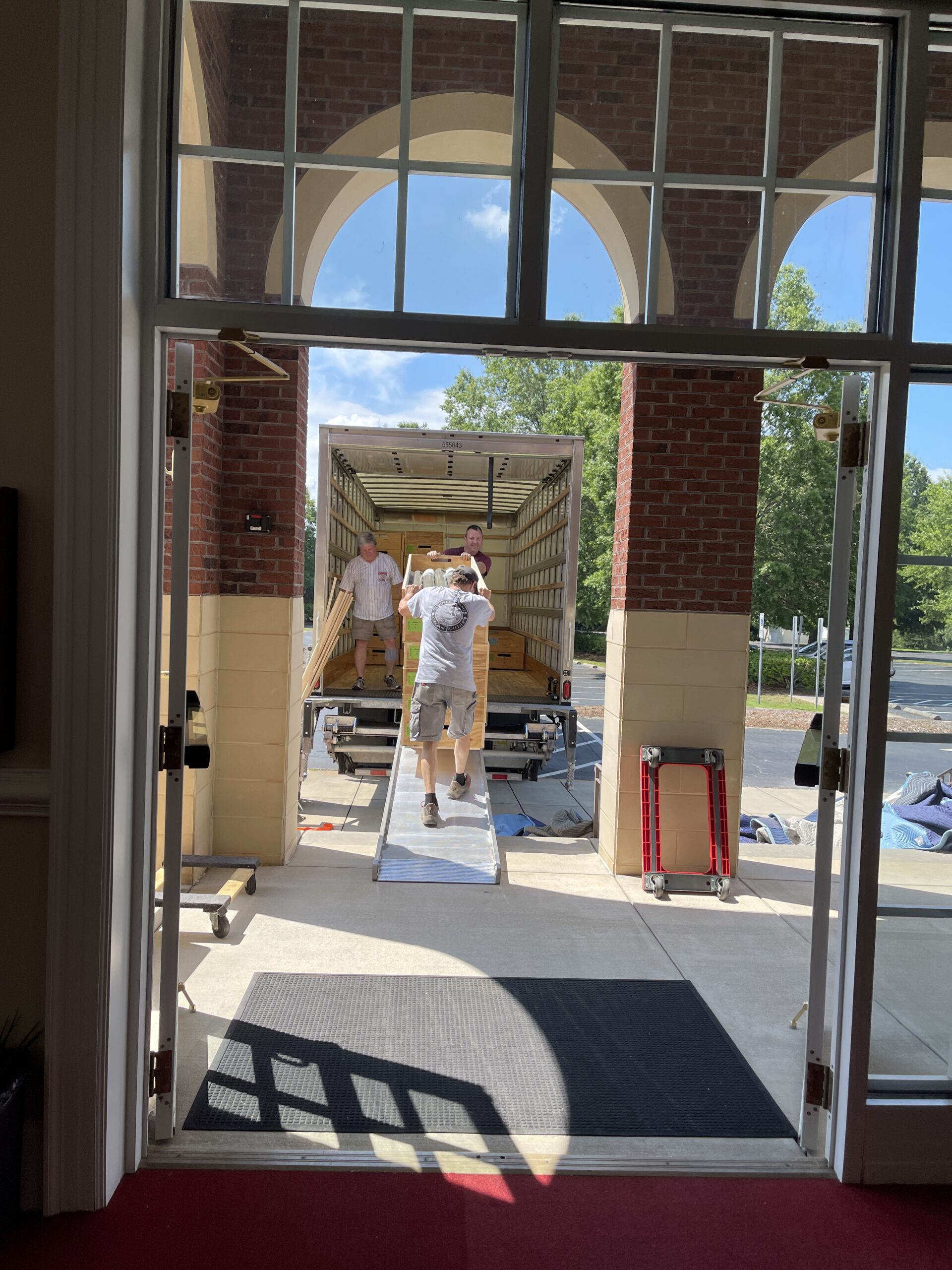
An organ of this caliber would cost well over a million dollars to build today. Calvary gave it to us outright. A private donor stepped forward and funded the entire cost of dismantling, crating, and transporting the instrument to Charlotte.
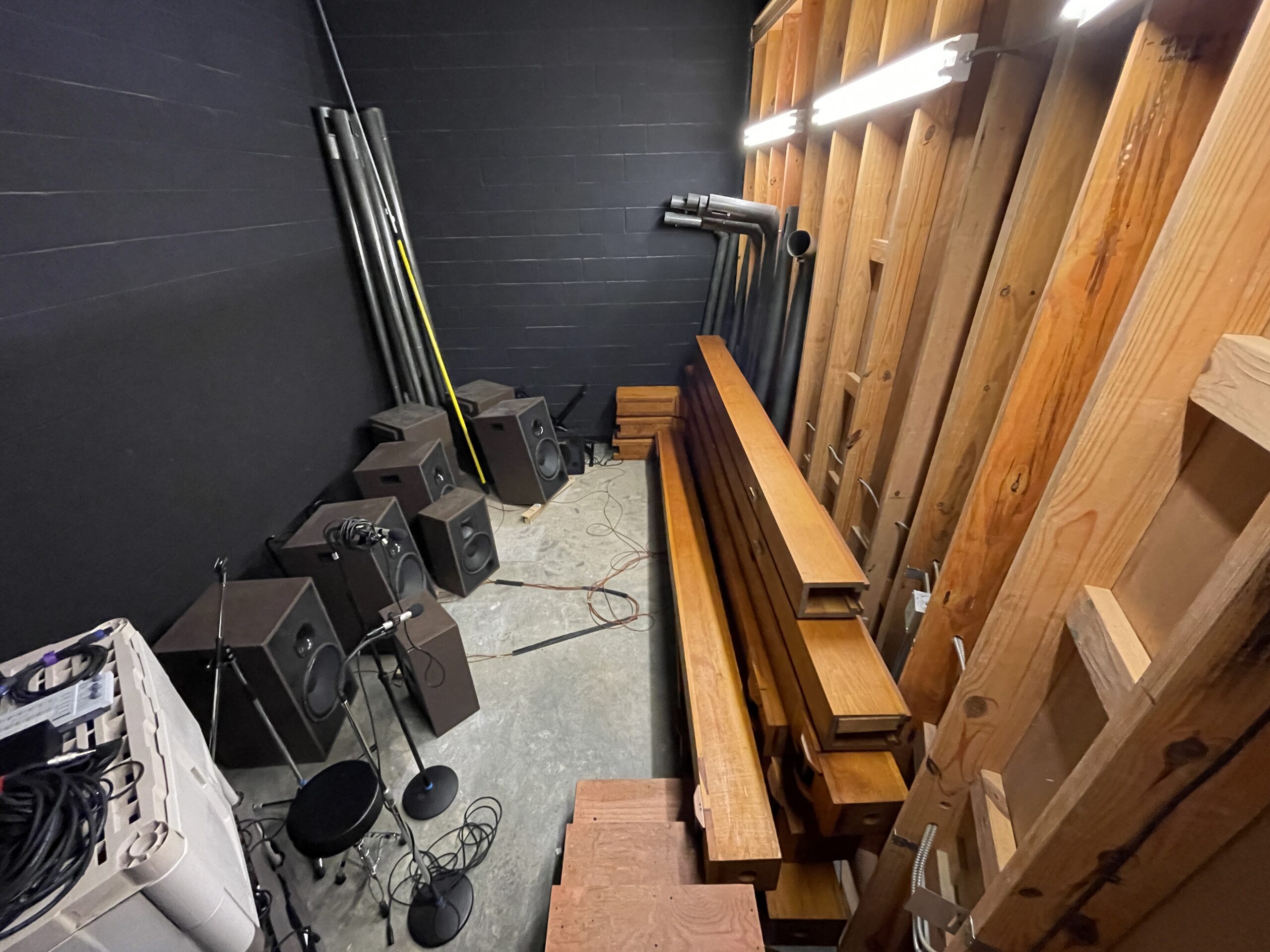
In 2022, Opus 1233 arrived at South Mecklenburg Presbyterian Church. And then, because an organ of this size cannot simply be plugged in, it waited.
What Makes Opus 1233 Special
For most of the twentieth century, the Aeolian-Skinner Organ Company was the most celebrated organ builder in the United States.
Their instruments are in the Cathedral of St. John the Divine, Symphony Hall in Boston, the Mormon Tabernacle, and hundreds of churches and concert halls across the country.
The man responsible for that reputation was G. Donald Harrison, Aeolian-Skinner’s tonal director. Harrison had a particular vision for what an American organ should sound like: clear enough for Bach, warm enough for a hymn, and grand enough to fill a room without ever turning harsh. Organists still speak about “the Harrison sound” as a specific and recognizable thing.
Opus 1233 was built in 1953 and voiced under Harrison himself.
Here is what that means in plain terms. An organ’s pipes are shaped and adjusted by hand, one at a time, to produce exactly the right sound in exactly the right room. That process is called voicing, and it is the difference between an instrument and a machine. The pipes in our sanctuary were voiced during the years when Harrison was at the height of his powers. Instruments from this specific window are increasingly rare, and increasingly treasured.
Why Now
Since 2022, Opus 1233 has been in storage, disassembled. Thousands of pipes, windchests, and mechanical components, carefully packed and waiting.
We have been worshiping in the meantime on a digital organ installed in 2008. It has served this congregation faithfully and well. But digital instruments have a lifespan measured in years, and pipe organs have one measured in centuries. The instrument in our storage room was built to outlast everyone reading this page.
There is also a practical reality. Organs in storage do not improve with time. Leather dries. Metal corrodes. The longer the wait, the higher the eventual cost, and the greater the risk of losing something irreplaceable.
And there is the simplest reason of all. This congregation sings. We have children’s, youth, and adult choirs, two handbell ensembles, and a worship life built around the conviction that music is not decoration but proclamation. An instrument like this one does not just accompany that. It transforms it.
The right time to restore Opus 1233 is now, while the instrument is sound, while this congregation is ready, and while the generosity is here.
The Restoration
Restoring a pipe organ of this size is closer to restoring a historic building than repairing an appliance.
Every component is inspected, cleaned, repaired or replaced, and then reassembled and tuned in place.
The work includes:
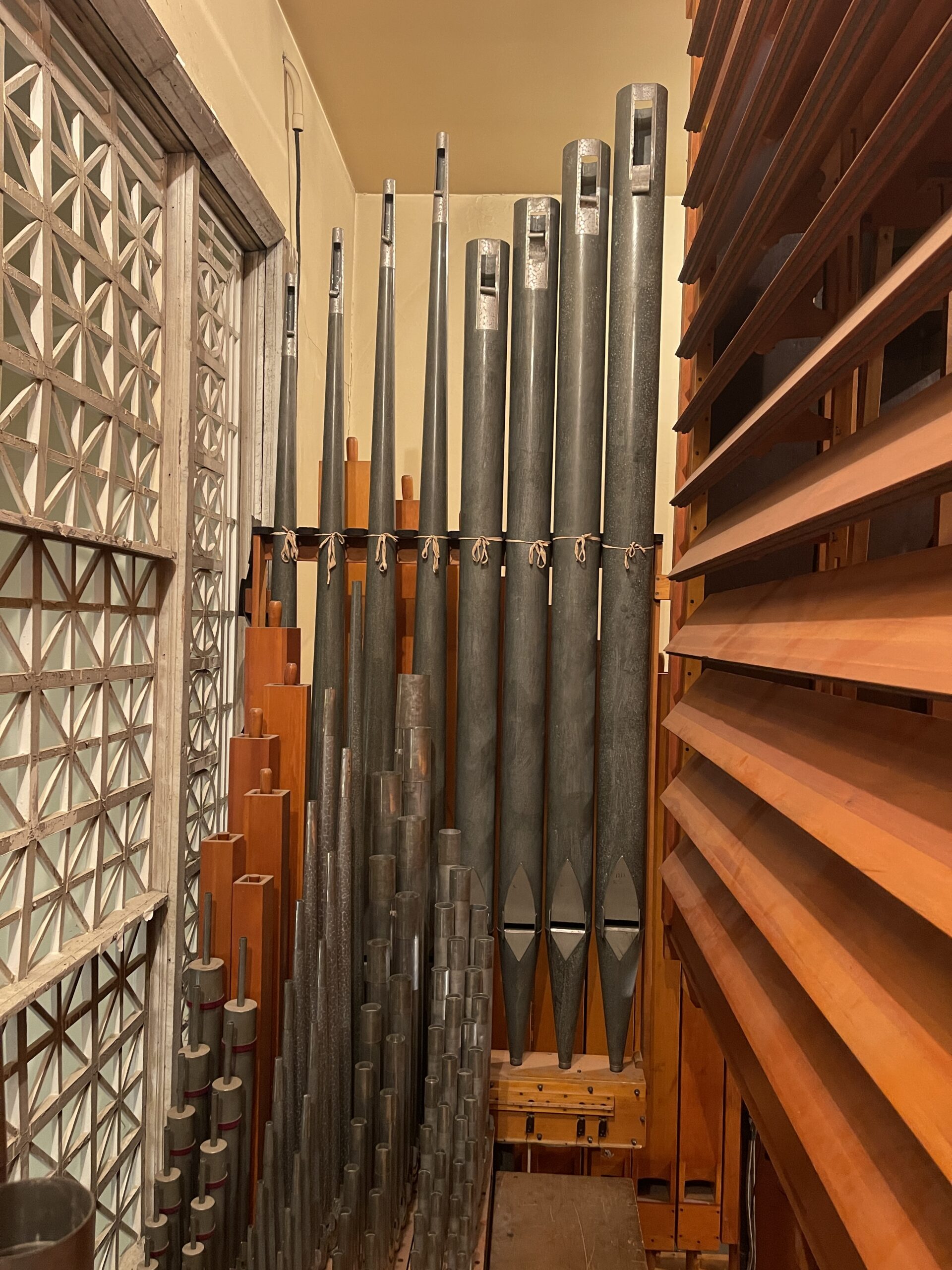
- Cleaning and repairing every pipe. Thousands of them, ranging from pipes larger than a person to pipes smaller than a pencil.
- Releathering the windchests and reservoirs. The organ’s leather components are original and past their service life. This is the single largest piece of the work.
- Restoring the wind system, the blower and ductwork that give the instrument breath.
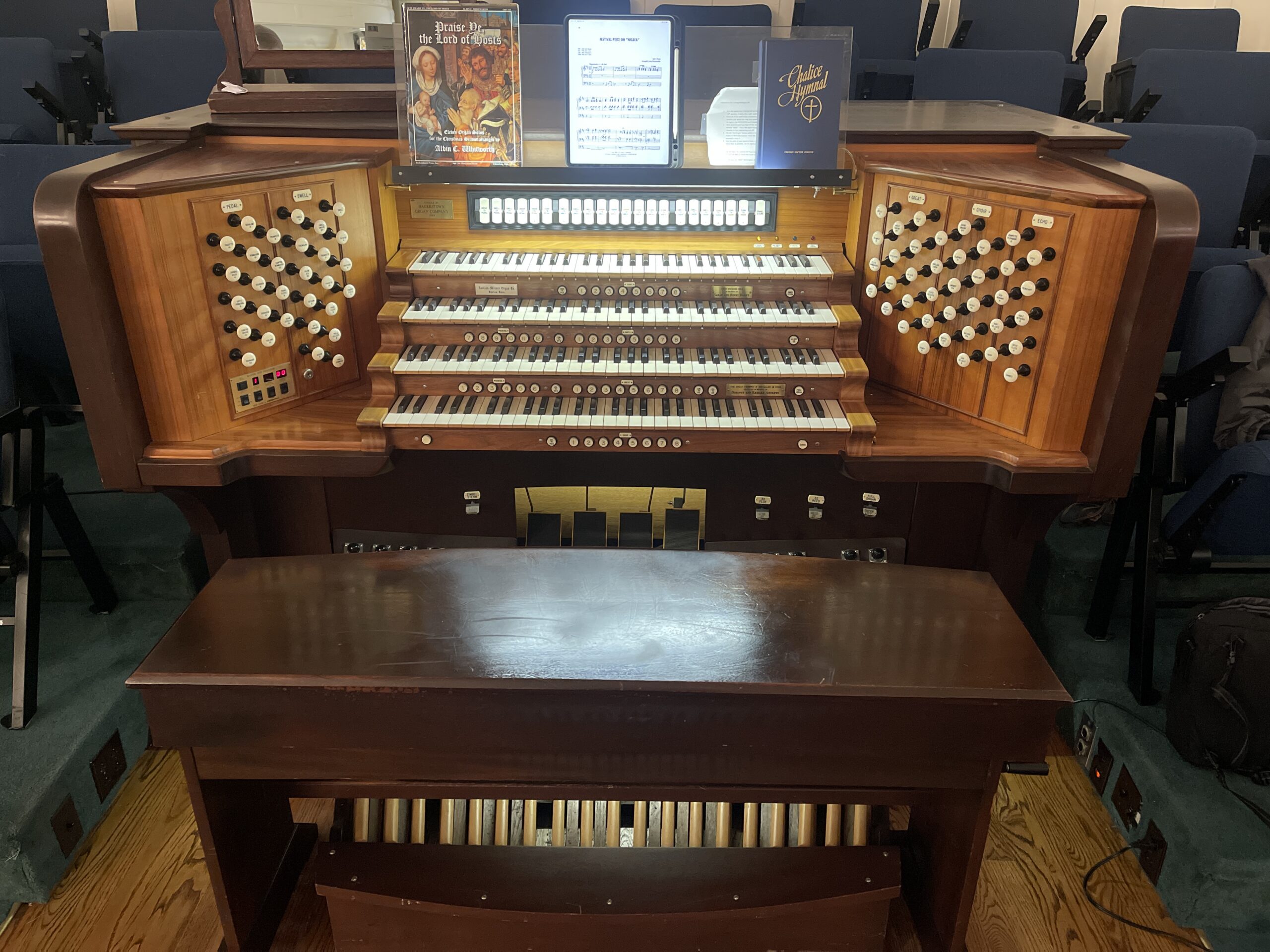
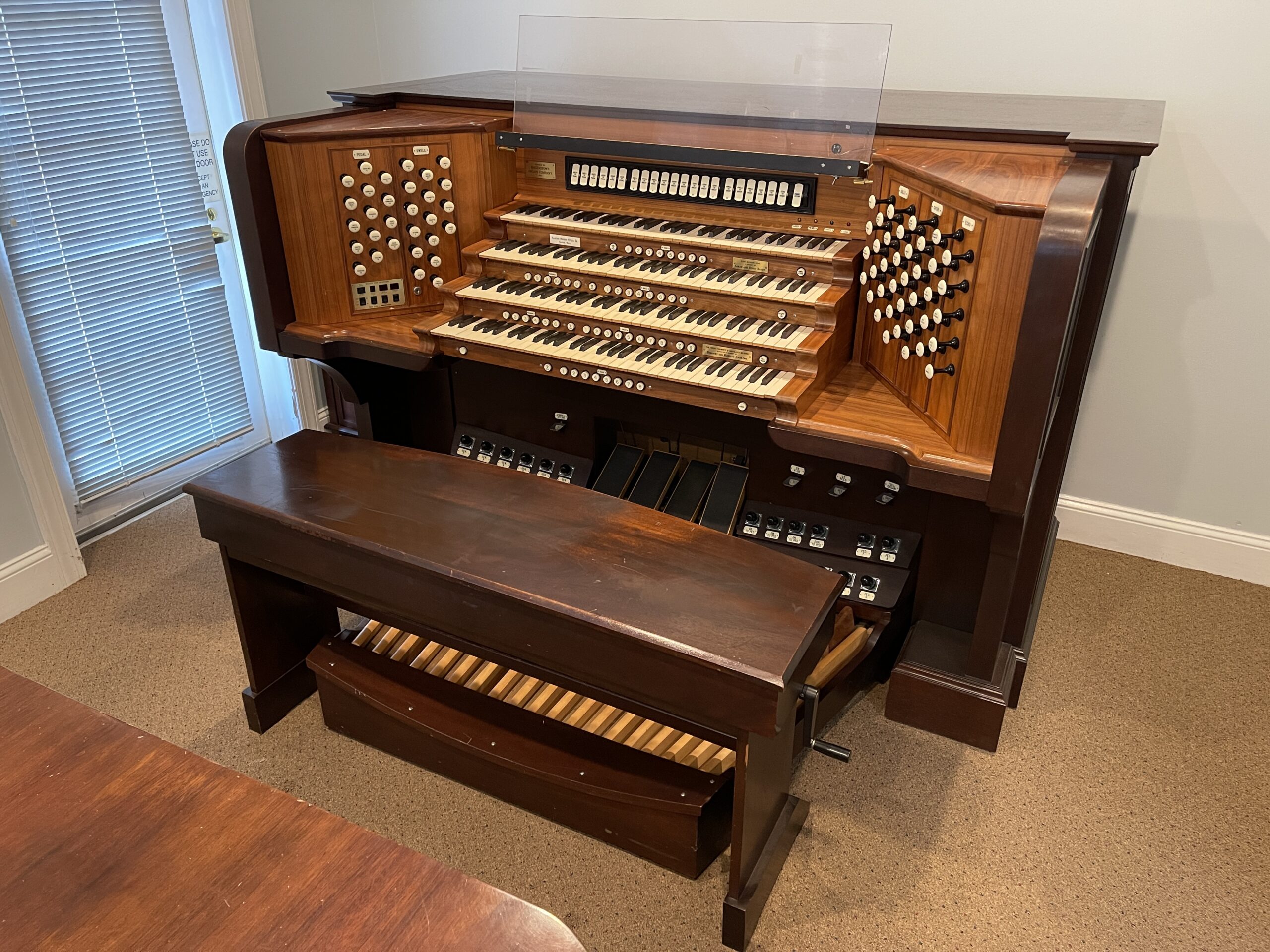
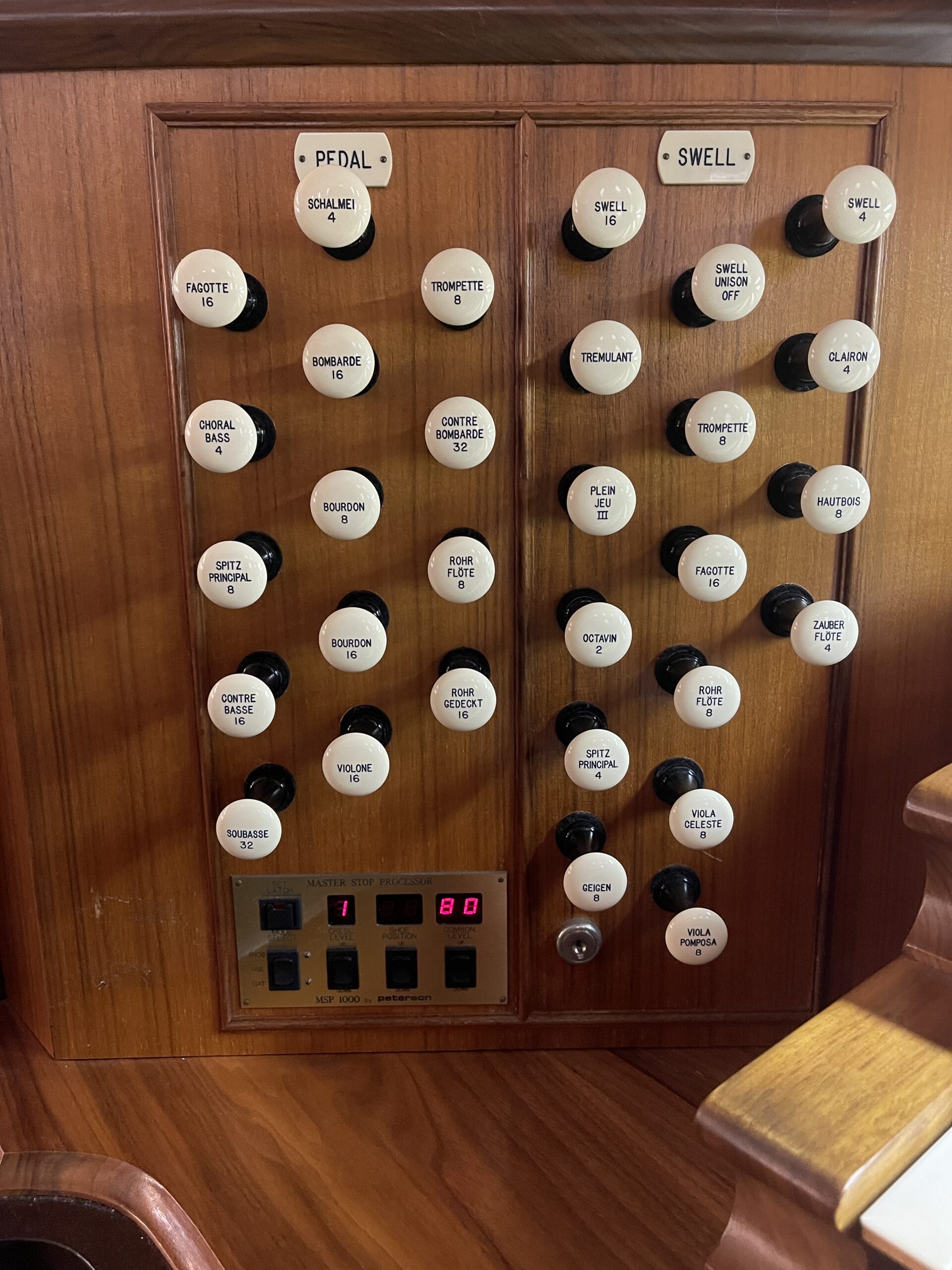
- Rebuilding the console, the keyboards, stop controls, and pedalboard the organist plays from.
- Installing modern control systems, so the organist can store combinations of stops and change them instantly during a service.
- Building and installing a new facade, described in the next section.
- Voicing the entire instrument for our sanctuary, adjusting every pipe by hand to our specific room. This is the step that turns a collection of restored parts back into Opus 1233.
An important note on what this organ is: every voice on the restored instrument will be produced by real pipes moving real air. The digital stops that had been added to the organ over the years are being removed entirely. What our congregation will hear is the genuine article.
The Builder
The restoration of Opus 1233 is in the hands of Lewtak Pipe Organ Builders of Mocksville, North Carolina, about ninety minutes up the road from us.
Timeline
As of September 2026, the contract with Lewtak Pipe Organ Builders is signed, and the work is scheduled. Below is the rest of our proposed timeline.
February 2027 - Restoration work begins
Winter and Spring 2027 - Component restoration and reassembly
Summer 2027 - Installation, facade, and on-site voicing
Late Summer 2027 - The organ sings in our sanctuary for the first time.
A Face for the Sanctuary
Right now, Opus 1233 exists in pieces.
No one who walks into our church has any idea it is here. For four years this remarkable instrument has been present and completely invisible.
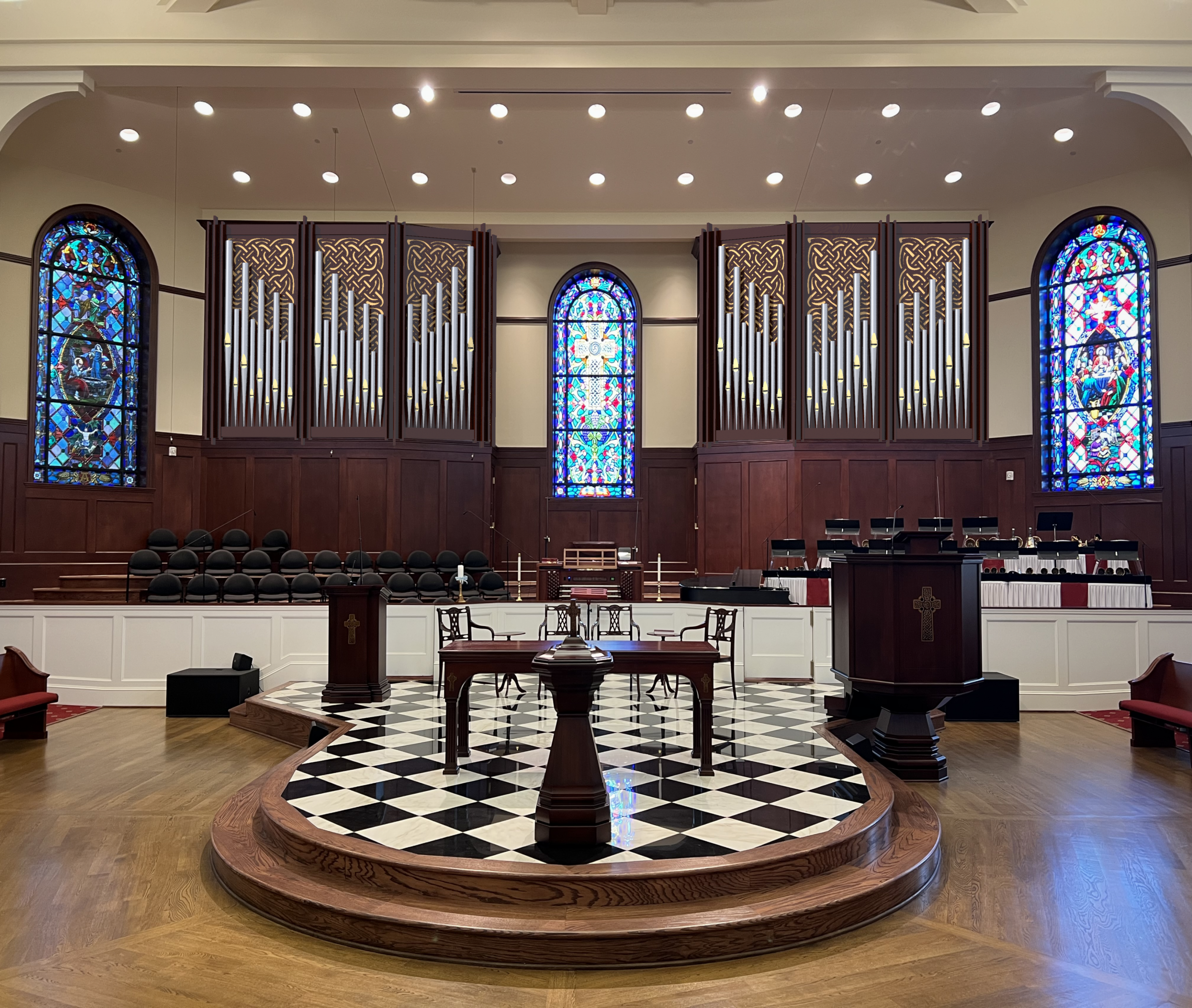
Restoration changes that. The organ will receive a new facade: the display pipework and casework mounted at the front of the sanctuary, visible to every person in every pew.
A facade is not decoration. It is how an organ announces itself, how it takes its place in a room, and how it tells a congregation that something significant lives here. For the first time in this instrument’s lifetime, Opus 1233 will have a face.
We cannot wait for the Sunday when this congregation walks in and sees it for the very first time.
Where We Stand
In the fall of 2026, we invited a small group of families to consider making this restoration possible.
We asked for $525,000. In twenty-two days, this congregation pledged $645,000.
We want to be honest about how stunning that is. Efforts of this size typically take a year or more. This one took three weeks. The families who stepped forward did so with extraordinary generosity, several with gifts far beyond anything we had imagined asking for.
The restoration of Aeolian-Skinner Opus 1233 is fully funded.
That sentence is the direct result of this congregation’s faithfulness, and we are still a little breathless about it.
Thank You
Portions of this instrument have been named in honor and memory of the families whose generosity made this restoration possible, including the instrument itself, the facade, the console, the wind system, the Swell division, and the organ bench.
We are deeply grateful to every family who gave, and to the private donor who funded the organ’s journey from Roanoke to Charlotte in 2022. This instrument has been carried here by generosity at every single step.
If You’d Still Like to Give
Several members have asked whether they can still contribute now that the goal has been met. The answer is a joyful yes, and here is exactly where those gifts would go.
Gifts toward the organ itself
- Expanding the instrument. Additional ranks of pipes would add voices Opus 1233 has never had, including a fuller pedal foundation and additional solo colors. Every rank added is a new sound available to this congregation forever.
- Improving the sanctuary’s acoustics. An organ is only as good as the room it speaks into. Acoustic improvements would benefit the organ, the choirs, and congregational singing all at once.
- Establishing a maintenance endowment. Pipe organs need regular tuning and, every few decades, significant work such as releathering. A dedicated fund would ensure this instrument is cared for long after all of us are gone. This may be the single most valuable gift anyone could make to the organ’s future.
Gifts toward our broader music ministry
- A new sanctuary piano
- Handbell equipment for our Chancel and Exultate Ringers
- Additional choir robes
- New music for our children’s, youth, and adult choirs
Gifts toward the life of the whole church
- The operating campaign, which sustains everything we do
- Capital maintenance, including HVAC, the parking lot, and sound and lighting systems
- The church endowment
How to give:
If your heart is with the organ, we would be delighted. Click here to give online. Choose "Other" and add "Organ Restoration" in the memo. If it is somewhere else in the life of this church, we would be just as grateful.
Follow the Progress
Restoration is a long process, and we intend to bring the congregation along for all of it. Expect regular photo updates, workshop reports, and, when the time comes, an invitation to watch the pipes go in.